Define the job geometry first
- Can the generator or light tower sit below the work and out of active travel lanes?
- What is the horizontal cable run or light throw to the task area?
- Are you feeding tool circuits, sensitive electronics, or both?
- Will the mast or fixtures need to clear aircraft-scale clearances or the underside of elevated galleries?
Short, direct cable runs reduce voltage drop and trip hazards inside dense utility corridors common in local data facilities. Wide, open aprons at major logistics nodes call for light placement outside tug paths with enough setback for turning equipment.
Atlanta conditions that change the plan
- Rainfall and red clay: Unpaved lots get slick and rutted. A stable pad for a generator or a leveled footprint for a light tower prevents lean and keeps doors serviceable.
- Humidity: Condensation risk in unconditioned interiors favors equipment with weather protection and appropriate cord routing to keep connections dry.
- Mixed-use sites: Daytime passenger or freight surges leave only narrow windows for staging. Quiet, compact options may be needed near occupied buildings; higher-output sets suit remote corners of industrial sites.
Narrow the generator choice
- Load profile: Note starting vs. running load for lifts, fans, pumps, or IT support gear. Sensitive electronics in high-density rooms may require cleaner power than general tools.
- Distance and distribution: Longer runs require heavier cabling and planned connection points. Identify any door thresholds, cable trays, or temporary ramps along the route.
- Placement surface: Asphalt, concrete, or compacted base handles weight differently than red clay. Verify the pad can bear static load without settling in wet weather.
Narrow the light tower choice
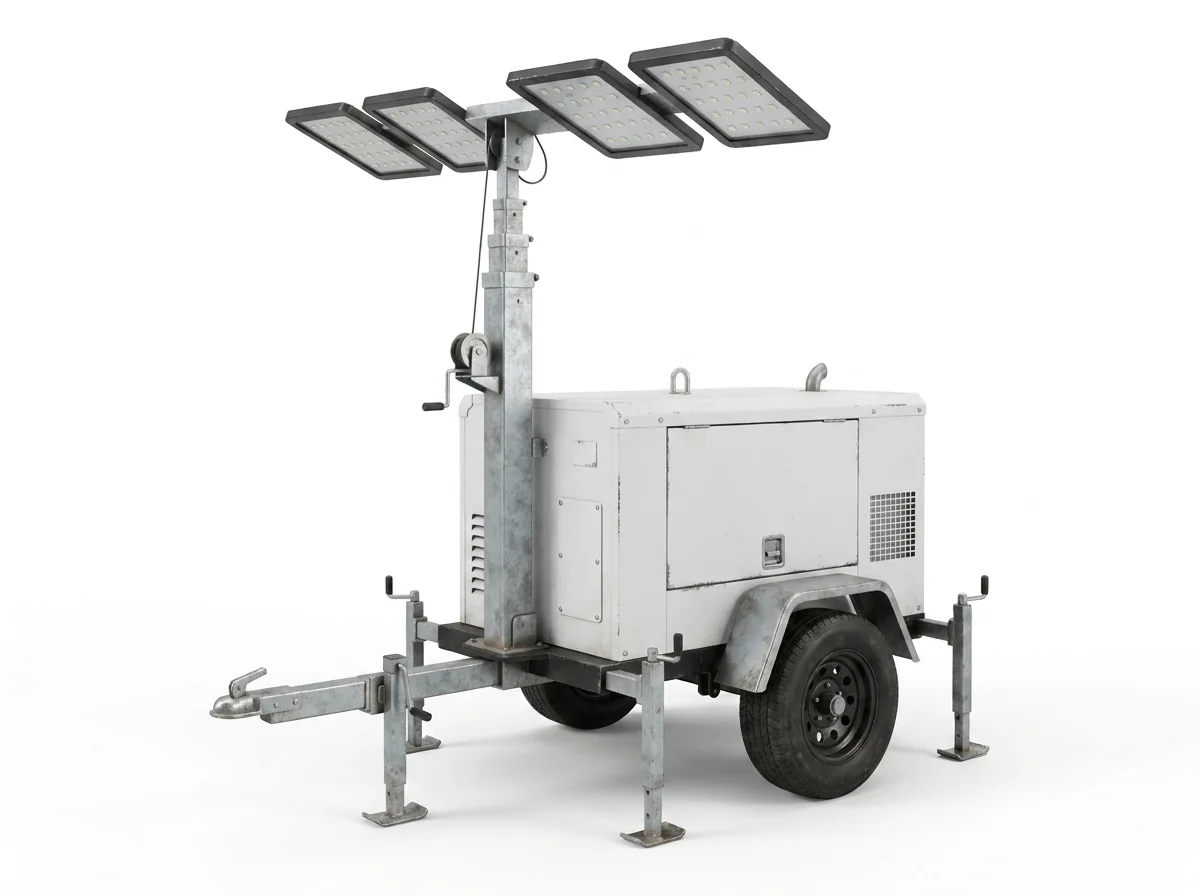
- Target area and height: Measure the work envelope, glare-sensitive zones, and any overhead restrictions. Interior maintenance in large rooms favors diffused, lower-glare solutions; exterior yards favor taller masts and broader coverage.
- Access and refueling path: Keep paths clear of lift swing radii and boom slewing areas. In tight service courts, towable units may need spot-by-spot planning.
Related access equipment
When illumination or power supports elevated work, align with the lift category: - Interior maintenance corridors: see /electric-scissor-lift-rental/ or /vertical-mast-lift-rental/. - Unpaved or uneven sites: see /rough-terrain-scissor-lift-rental/ or /boom-lift-rental/.
Actual site conditions, the selected unit’s instructions, and site procedures govern placement and use around elevated work.